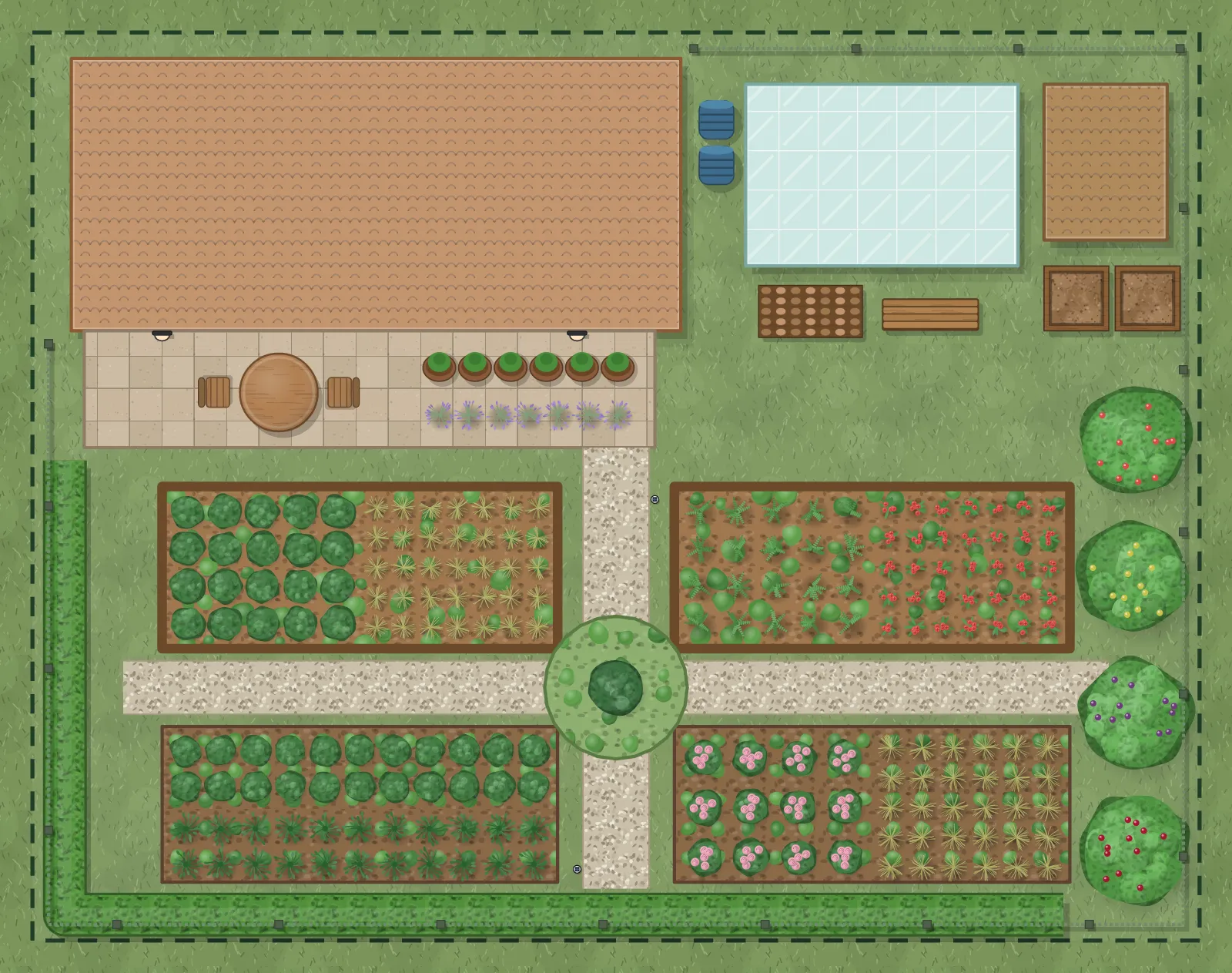
Raised bed size and spacing: how wide, how long, how far apart
Make raised beds 1.2 m (4 ft) wide if you can reach in from both sides, or no more than 60–75 cm (2–2.5 ft) if they stand against a fence. Leave at least 45 cm (18 in) between beds, and 90 cm (3 ft) where a wheelbarrow needs to pass.
| Measurement | Recommended |
|---|---|
| Width, open on both sides | 90–120 cm (3–4 ft) |
| Width, against a wall or fence | 60–75 cm (2–2.5 ft) |
| Length | any; 2.4 m (8 ft) is common |
| Height for most vegetables | 25–30 cm (10–12 in) |
| Height to work without bending | 60–80 cm (2–2.5 ft) |
| Path between beds | 45–60 cm (18 in–2 ft) |
| Path for a wheelbarrow or wheelchair | 90 cm (3 ft) or more |
Why width matters most
The whole point of a raised bed is that you never step on the soil. Most adults can reach about 60 cm (2 ft) comfortably, so a bed reached from both sides should not be wider than 120 cm (4 ft). For children or anyone with limited reach, 90 cm (3 ft) is kinder.
Length and materials
Length is up to you, but very long beds make you walk around them. Lumber often comes in 2.4 m (8 ft) lengths, which is why 1.2 × 2.4 m (4 × 8 ft) beds are so common: they waste almost nothing.
Laying out several beds
- Run beds north to south where you can, so both sides get similar sun.
- Put tall crops (beans, tomatoes, corn) on the north side in the northern hemisphere so they do not shade the rest.
- Keep one main path at 90 cm (3 ft) wide for the wheelbarrow, and narrower paths between beds.
- Leave space for a compost bin and a water butt near the beds, not at the far end of the yard.
How many beds to start with
Two or three beds of 1.2 × 2.4 m (4 × 8 ft) is a good first season. That is enough for salads, herbs and a few bigger crops without the garden taking over every evening. Four beds also make crop rotation easy: move each group of crops one bed along every year.